What makes an exceptional Executive MBA cohort?
By
Katharina Lapuerta
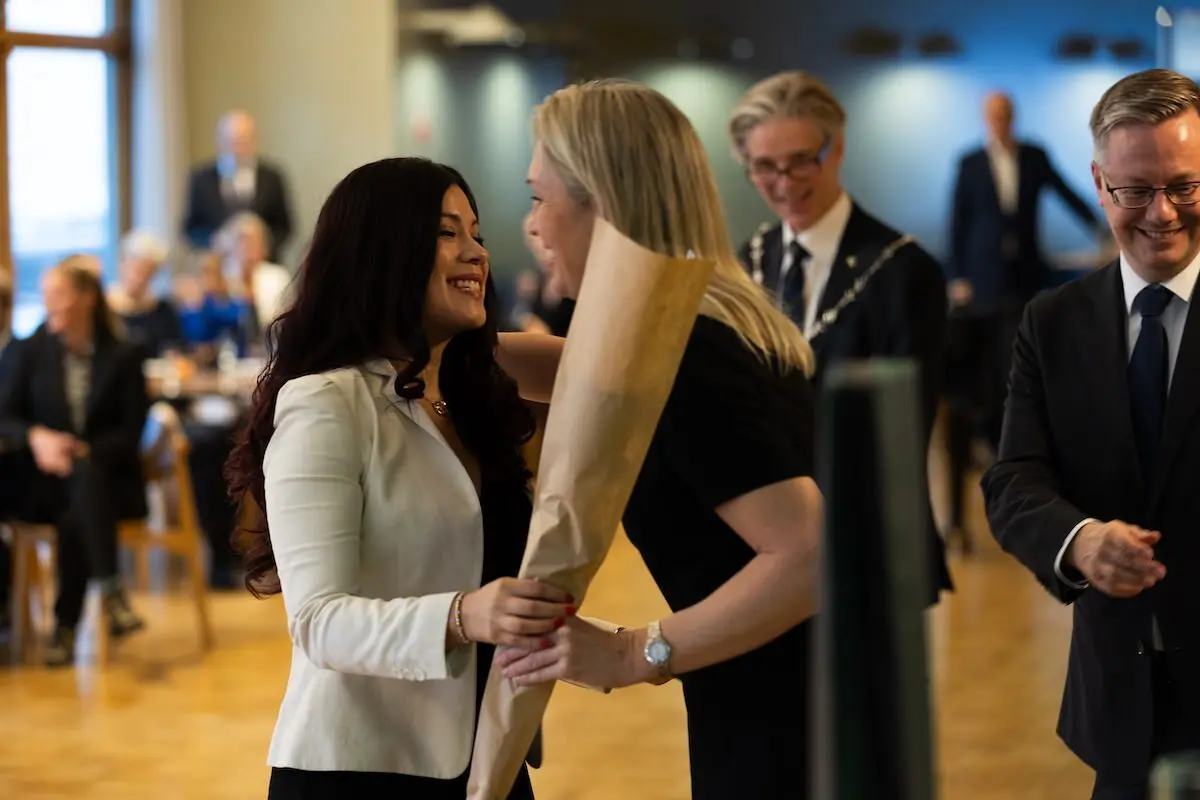
It’s not just who joins an Executive MBA — it’s how diverse perspectives become a trusted community.
When professionals consider an Executive MBA, they often focus on the curriculum, faculty, academic quality, and reputation of the programme. These are all important factors. But when alumni reflect on their experience during their studies as well as years later, many speak just as strongly about something else: the people they shared the journey with.
The conversations in the classroom, the group assignments, the informal discussions between modules, and the shared challenges along the way all shape how participants grow as leaders. This makes an Executive MBA not only an individual learning experience, but a collective journey.
That is why the composition of an EMBA cohort matters.
An exceptional cohort is not simply a group of accomplished professionals. It is a carefully formed learning community where different industries, functions, backgrounds, and perspectives come together. When the group dynamic works, participants do more than exchange knowledge. They challenge assumptions, broaden one another’s thinking, and build a foundation of trust that makes deeper learning possible.
At Hanken Executive MBA, this peer-to-peer learning is one of the defining strengths of the programme. Participants enter with their own expertise and experience, but they leave with something broader: new perspectives, lasting relationships, and a trusted community of leaders around them.

Key takeaways
- Diversity makes learning richer, but diversity alone is not enough.
- Meaningful peer learning requires openness, trust, and active engagement.
- Small cohorts create better conditions for deeper discussions and stronger relationships.
- Hanken EMBA participants learn as much from each other as they do from faculty and coursework.
- The most successful cohorts become communities that continue to support one another after graduation.
Diverse perspectives create better learning
Many leaders spend much of their working life surrounded by people who operate in the same industry, organisation, or professional context. Over time, that can shape how challenges are understood and how solutions are developed. An EMBA cohort offers a valuable opportunity to step outside that familiar environment.
In a diverse group, participants encounter people who may approach leadership, strategy, innovation, and change from completely different angles. A challenge that feels specific to one manufacturing industry may reveal patterns that are relevant across financial services. A solution from the public sector may spark new thinking in a global technology company.
For Carolina Garzon, peer learning was one of the most meaningful parts of her EMBA experience:
Being able to learn from my peers in different industries has been a highlight of my EMBA. I have had the chance to learn from them and expand my horizons, not only during group assignments, but also in discussions during the modules.
This kind of learning is difficult to replicate in a traditional classroom setting. It happens through dialogue, reflection, and exposure to perspectives that participants may not encounter in their everyday professional lives.
Mikko Aho also highlights the importance of peer learning and practical group work:
It has been very rewarding to see and hear the experiences of people coming from different backgrounds. The most valuable part of the EMBA studies has definitely been the group work, where we analyze and solve real-life challenges.
In this environment, participants are not only studying leadership. They are practising it. They learn to listen, question, collaborate, and solve problems together with people whose experiences differ from their own. That is where much of the value of an EMBA cohort lies.
Why diversity alone is not enough
Diversity is often described as a strength in itself. And it is. But in an Executive MBA setting, diversity alone is not enough.
A group can include people from different industries, functions, and countries, but that does not automatically lead to meaningful learning. For diversity to create real value, participants need to be willing to engage openly with one another. They need to be curious, generous with their experience, and prepared to both challenge and be challenged.
This is why at Hanken Executive MBA, cohorts are intentionally kept at a size that enables participants to get to know one another deeper. Through discussions, group assignments, study trips abroad, and shared experiences over the course of the programme, relationships develop naturally and conversations become more meaningful.
These interactions help create the conditions for deeper reflection and richer peer learning. Participants move beyond exchanging ideas and begin to explore real leadership challenges, organizational dilemmas, and personal experiences.
The result is a learning environment where diverse perspectives can be fully leveraged—not because participants come from different backgrounds, but because they are willing to engage with one another in an open and meaningful way. In other words, the strength of a cohort is not only defined by who is in the room. It is defined by what happens between the people in the room.
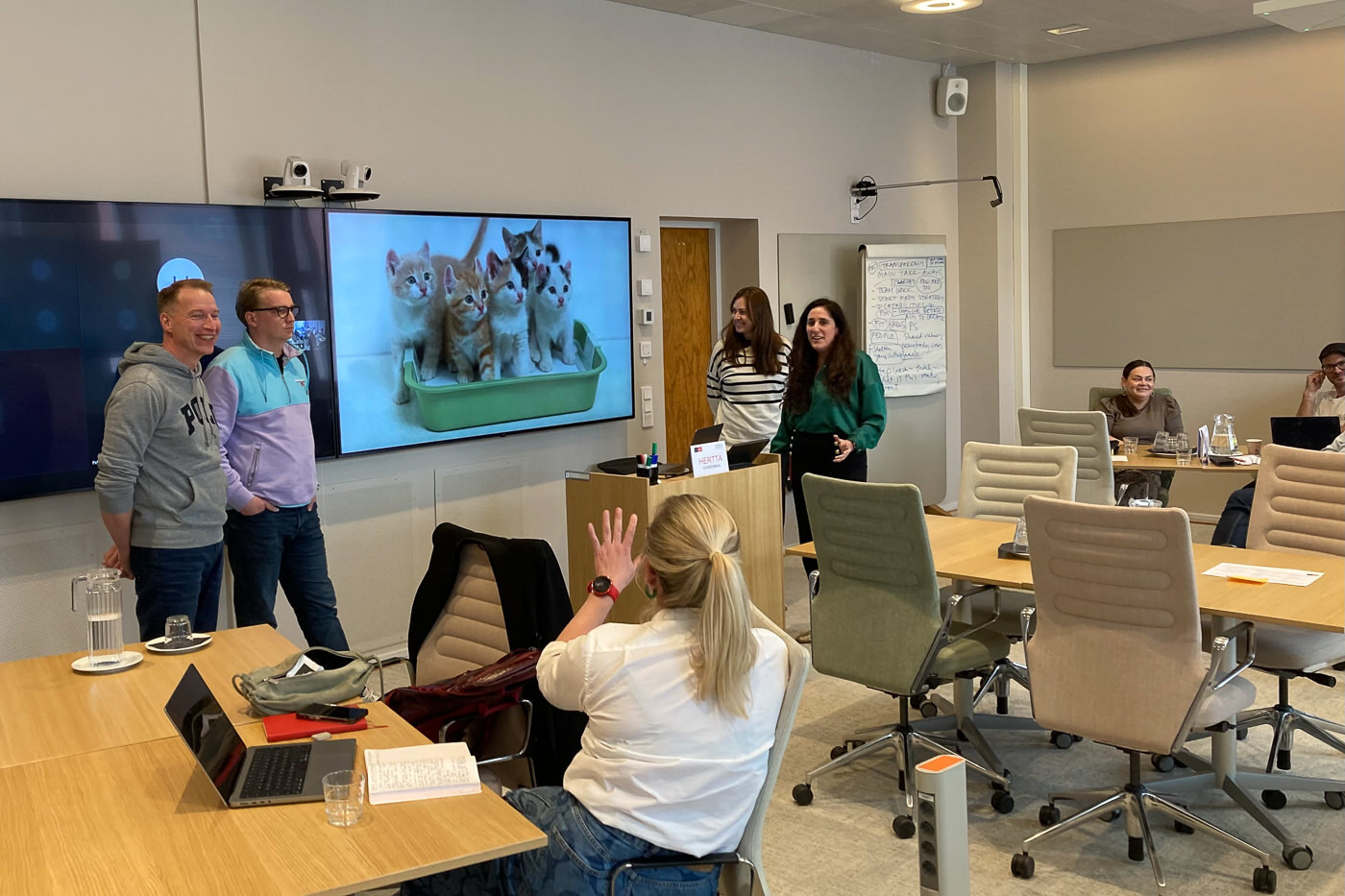
When a cohort becomes a community
Over time, an EMBA cohort can become much more than a professional network. The shared experience of learning together, working through demanding assignments, travelling through modules, and reflecting on leadership challenges creates bonds that often last well beyond graduation.
For Catharina Candolin, this sense of community was one of the most meaningful parts of the programme:
I loved this part about our program. Since the group was small and intimate, there was a level of trust that you seldom achieve in larger groups. That enabled very good discussions, and I felt I learnt a lot about other industries and work profiles.
Her reflection captures something essential about the EMBA experience: trust changes the quality of learning. When participants feel safe to speak openly, discussions become more honest, more relevant, and more impactful. Catharina continues:
“I also felt our group was extremely tight. We were living and breathing the ‘all for one, one for all’ concept; there was always someone looking out for the benefit of the whole group, and if it was felt that one person was in some sort of mishap, everyone came together to support that person. This you cannot buy for money — it is the result of all those bright and wonderful people in our cohort that were motivated to learn, and to do so together with and from each other.”
This is what happens when a cohort becomes a community. The relationships formed during an EMBA are not simply transactional connections. They become sources of support, challenge, perspective, and encouragement. Participants find people who understand the complexity of leadership and who can act as sounding boards long after the programme has ended.
That sense of community does not happen by accident. It grows from a combination of shared ambition, openness, diversity, and trust.
Learning that reaches beyond the individual
The value of a strong EMBA cohort does not remain within the programme. Participants bring new perspectives, ideas, and ways of thinking back into their organisations.
This is especially important in today’s business environment, where leaders are expected to navigate complexity, lead transformation, and work across organisational boundaries. Exposure to different industries and leadership contexts helps participants challenge narrow thinking and see their own organisation with fresh eyes.
Katja Knuutinen describes the importance of looking beyond one’s own industry perspective:
Too often in Finland, we aim to look only from our own box and from our own industry perspective. So definitely the value comes from learning from others.
This is one of the reasons why cohort diversity matters so deeply. It gives leaders a broader frame of reference. It helps them recognise patterns, question assumptions, and identify new possibilities.
Katja also points to the organisational impact of Executive MBA learning:
“I would definitely encourage companies to always send two to three people to this programme. It’s much more likely that the organisations will actually take the change journey when they have more people bringing the message and taking the change and starting the journey together.”
This perspective highlights an important point: an EMBA does not only develop individual leaders. It can also accelerate change within organisations.
When participants return to their teams with broader perspectives and stronger leadership capabilities, they can influence how decisions are made, how collaboration happens, and how change is led. And when several people from the same organisation take part, the learning can become even more embedded in the organisation’s development journey.
The people around the table matter
So, what makes an exceptional EMBA cohort?
It is not only seniority, experience, or impressive professional backgrounds. It is not only diversity across industries and functions. And it is not only a shared ambition to grow as leaders. It is the combination of all these elements — brought together in a way that allows trust, openness, and genuine peer learning to develop. As one former EMBA participant put it:
The EMBA cohort served as my extended management team, a trusted group with whom I could spar ideas.
An exceptional cohort gives participants access to perspectives they would not otherwise encounter. It creates space for honest conversations and meaningful challenge. It supports participants through demanding moments and celebrates their growth along the way. It reminds leaders that learning does not happen in isolation.
At its best, an Executive MBA is not just a programme. It is a shared journey with people who challenge, support, and inspire one another. The result is more than a network. It is a trusted community that continues to create value long after the formal studies are complete.
Osamah Al-Ogaili reflects on this unexpected dimension of the EMBA experience:
"You expect the top-notch quality of the know-how of the learning, but I didn’t expect that excellent and amazing cohort which I was with and I could call them friends now after those couple of years."
In the end, one of the most important parts of any Executive MBA is not only what you learn, but who you learn with.
Learn more about the Hanken EMBA
Book a meeting to chat about joining the Hanken EMBA
Contact us for
more information

Related articles
View all articles
Promoted mid-programme: How Thomas used his EMBA studies to spark career growth

The EMBA through a founder’s eyes – an investment that paid off

From introvert to connector: Adriana Garcia's EMBA journey of growth