A fish rots or rocks from the head down
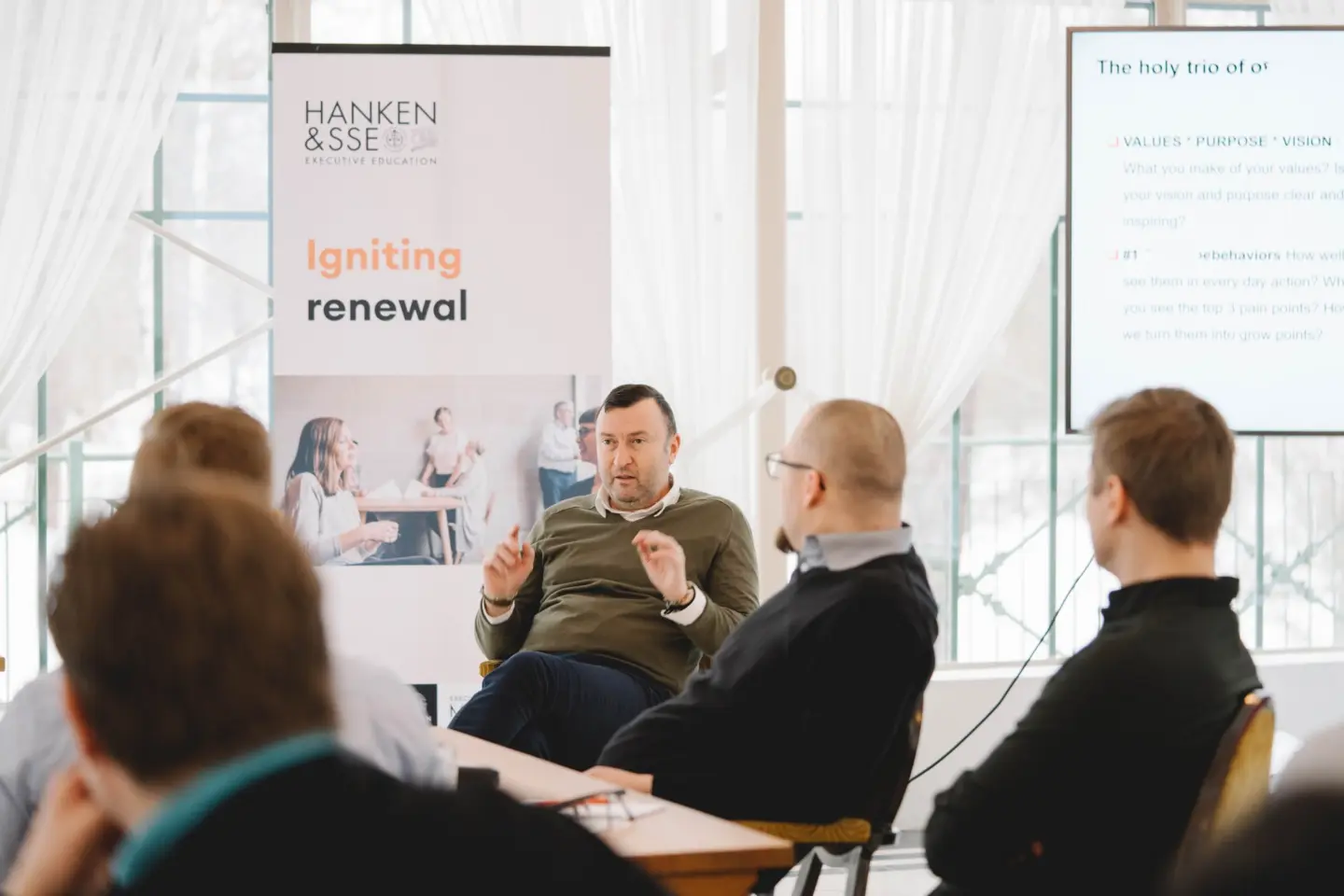
A brief journey to the limitations and growth potential of management teams.
Undoubtedly a top-performing management team is the make-or-break factor for a company's growth and development. A handpicked by the board CEO, headhunted high-calibre professionals and experts with proven success records, it is the management team that will:
- create and approve the company vision and strategy
- set the pace and quality with which strategy is executed and objectives are reached
- serve as the role models that radiate and set the tone for the overall corporate culture
Against this background, years of executive education experience suggest it's considerably more complicated. To start with, as we know, a star team is not a team of stars. Therefore, even if on paper we have a group of impeccable professionals (with impressively solid looks on the company website), this is not necessarily a star team.
Management teams need development and the humble self-realisation that any team, stars or no stars, goes through the same stages of forming, storming, norming and performing. Thus, it is the ability to see through the thick smoke of one's own (and colleague's) greatness and realise that it's not enough.
In addition, even if the knowledge exists, we may need more effort. One challenge is simply finding the time for team development activities. Another is to over-rely on uber-experienced professionals that will somehow find a way to work together. Both lead to underperformance! The development of a management team must be a top priority. What might it accentuate?
01 Joint understanding of the team mission
Yes, you read correctly – management teams need it perhaps even more than any other team. What are we supposed to achieve as a team? Why do we exist as a team? Often you may hear "to run the business successfully" or "to manage the business according to the strategy". But then again, what does "successfully" mean - the word may have many different interpretations. How is managing the business different from leading the business? And what exactly does it mean and include?
02 Aligned leadership vocabulary
In an average management team, each team member comes from a different background that may include a different culture, industry, academic degree, present or absent prior management education and, often, different executive education experience. That results in varying levels of knowledge and interpretation. For instance, what is leadership, and what do we call good leadership? Or what exactly is coaching, and how is it employed as a leadership style and communication instrument? Or what exactly do we mean when we say "agile organisation" or "innovative culture"? We may use the same words but operate with different meanings and can easily misinterpret each other. A high-performing management team can't tolerate such misinterpretation.
03 Strategic alignment
Our strategy says we must become "digital champions", but what does that mean? Do we understand it in the same way? And what about "winning the sustainability battle" or "being at the forefront of the circular economy"? These are all great things, but each of them leaves the door open for a considerable amount of different interpretations. You can tolerate them in an academic conference but not in strategy execution – here, clarity rules. In strategy execution, even small gaps in the management team's interpretation may lead to organisational confusion and execution setbacks.
04 Team culture and efficiency
Team culture and team efficiency are not the same thing. Imagine a merry team where we all respect, adore and praise each other, yet little is accomplished. Or the other way around – serious, focused and efficient people who push hard and do their part but without meaningful emotional bonds or the psychological comfort of a shared culture. Thus, measuring team performance is a delicate issue – we need to assess culture and efficiency on two levels: the team as a group and everyone as a team member. We at Hanken & SSE have developed an HPT (high-performing teams) index assessment tool - it helps reliably pinpoint possible misbalances. It highlights the most significant development areas for the team and its members.
05 The high priests of the corporate culture
The management team is the tone-setter in building a winning corporate culture. Firstly, they modify, calibrate and change the existing corporate culture elaborated and promoted through deliberate leadership behaviours. Secondly, they must be role models, the priests that radiate, demonstrate and relentlessly promote the chosen leadership behaviours. That's a tall order! It requires the team to realise its responsibility not only for driving the strategy, making the figures and growing the business but also for the culture they create.
Each management team member needs to understand how much and how crucial their behaviour, attitude, communication and time management influence others and the general corporate culture.
Actionable steps to develop a strong management team
So what is to be done to ensure the effectiveness of your management team? A competent management team must consider the following three steps:
- Allocate time and understand the value of ongoing team development
- Get a 360° honest and realistic assessment of team performance and pinpoint development needs
- Prioritise and develop a clear action plan for the team and each team member
What happens if a management team don't find the time or don't invest efforts in their team development? Well, imagine a choir where everyone sings a different song in a different tune. Can you follow? Not really. Or imagine a group of top performers who don't have time and patience for each other as each wants to shine and outperform their peers. Wouldn't you be worried about the quality of the decisions of such a team and the culture they will inevitably impact? Wouldn't you worry about the company's future in such a case?
A great management team can and should genuinely rock the business and fill it with energy, enthusiasm, clarity and drive to execute. A less excellent management team may insert confusion rather than clarity, stagnation rather than drive and not develop but spoil the corporate culture by exhibiting daily (often unconsciously) less-than-desirable behaviour. Which way do we go? The fish may rock from the head down, but it may also rot from there!
Through our development programmes and coaching, management teams renew themselves on an individual and a team level. While the team strengthens its capabilities, competence, and way of working, individual management team members build their own development plans as a leader. We combine development and group coaching methods, surveys, mapping, and self-assessment methods to support renewal.
You can download our Strategic Renewal Survey 2023 here.
About the author
Peter Zashev (PhD Econ) is a Program Director at Hanken & SSE. He is an academic, business trainer and high-energy speaker on leadership, change and strategy. Peter has 18 years of executive education experience working with hundreds of talents and management teams and is highly appreciated for his energetic and humorous approach. He is an Adjunct Professor at the Stockholm School of Economics in Riga. Peter is Bulgarian by origin, Finnish by nationality, Estonian by residence, half Swedish by workplace and with an extensive business experience from Russia and Eastern Europe. He speaks Bulgarian, English, Finnish and Russian.